Data Nexus approached Merchy as a product architecture problem, not a UI project.
1. Canonical Transaction Model
Instead of designing domain-specific flows, Data Nexus defined a universal transaction sequence that acts as the invariant core of the platform:
Browse → Select → Configure → Schedule → Fulfillment → Payment → Post-Order
All supported verticals — retail, food, services, bookings — are specializations of this same transaction graph, differing only in domain rules and data, not in structural logic.
2. State-Driven UX Architecture
Merchy was designed around states, not screens.
Key principles:
variations are modeled as state changes, not navigation branches
configuration flows are nested states, not new pages
filters and options are overlays, not separate interfaces
post-order interactions are continuations of the transaction
This approach:
reduced UX and development duplication
prevented interface explosion
preserved cognitive clarity for end users
3. Multi-Vertical Scalability on a Single Core
Using the same transaction engine, Merchy supports:
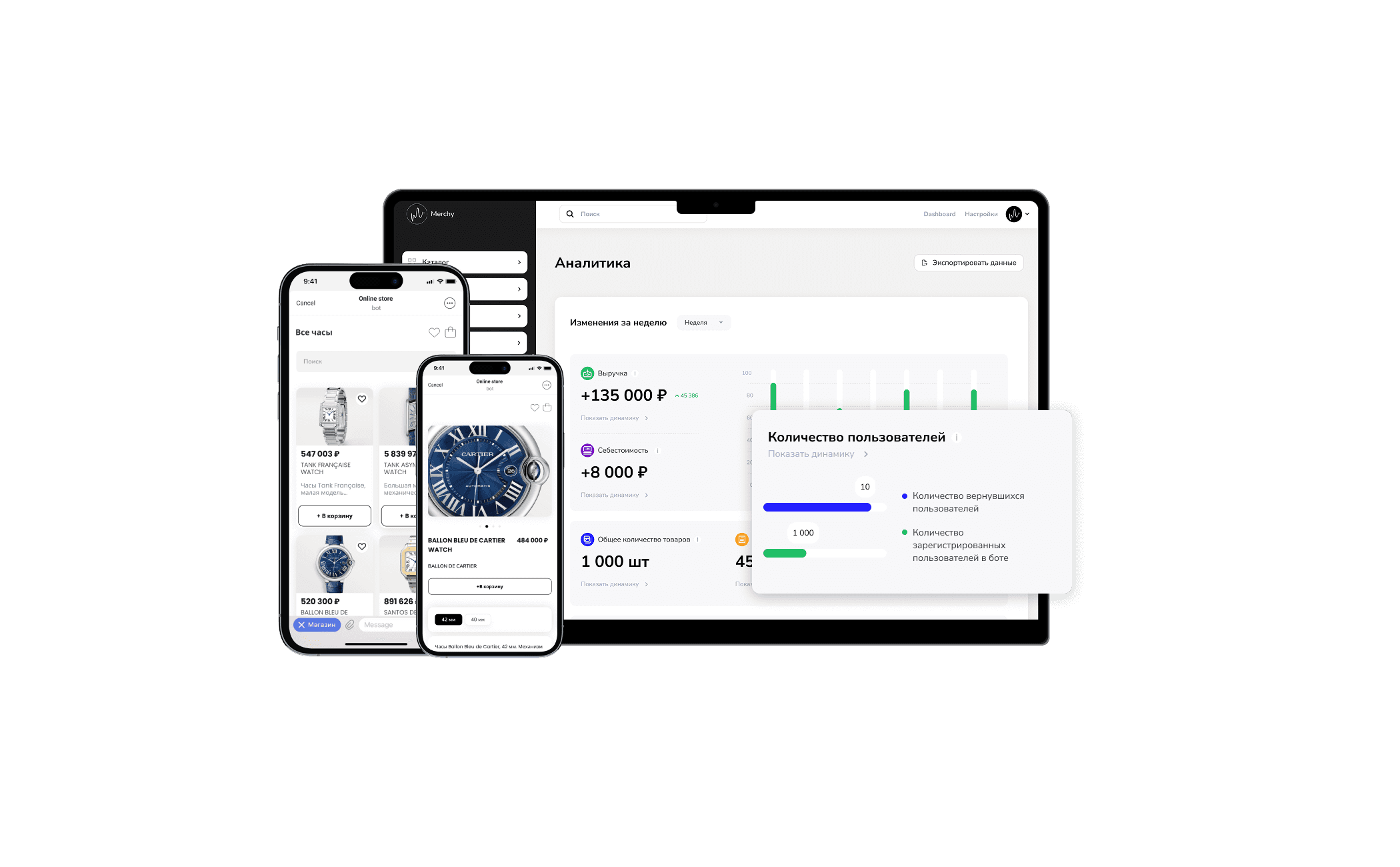
Retail & E-commerce
catalogs, filtering, variants, discounts
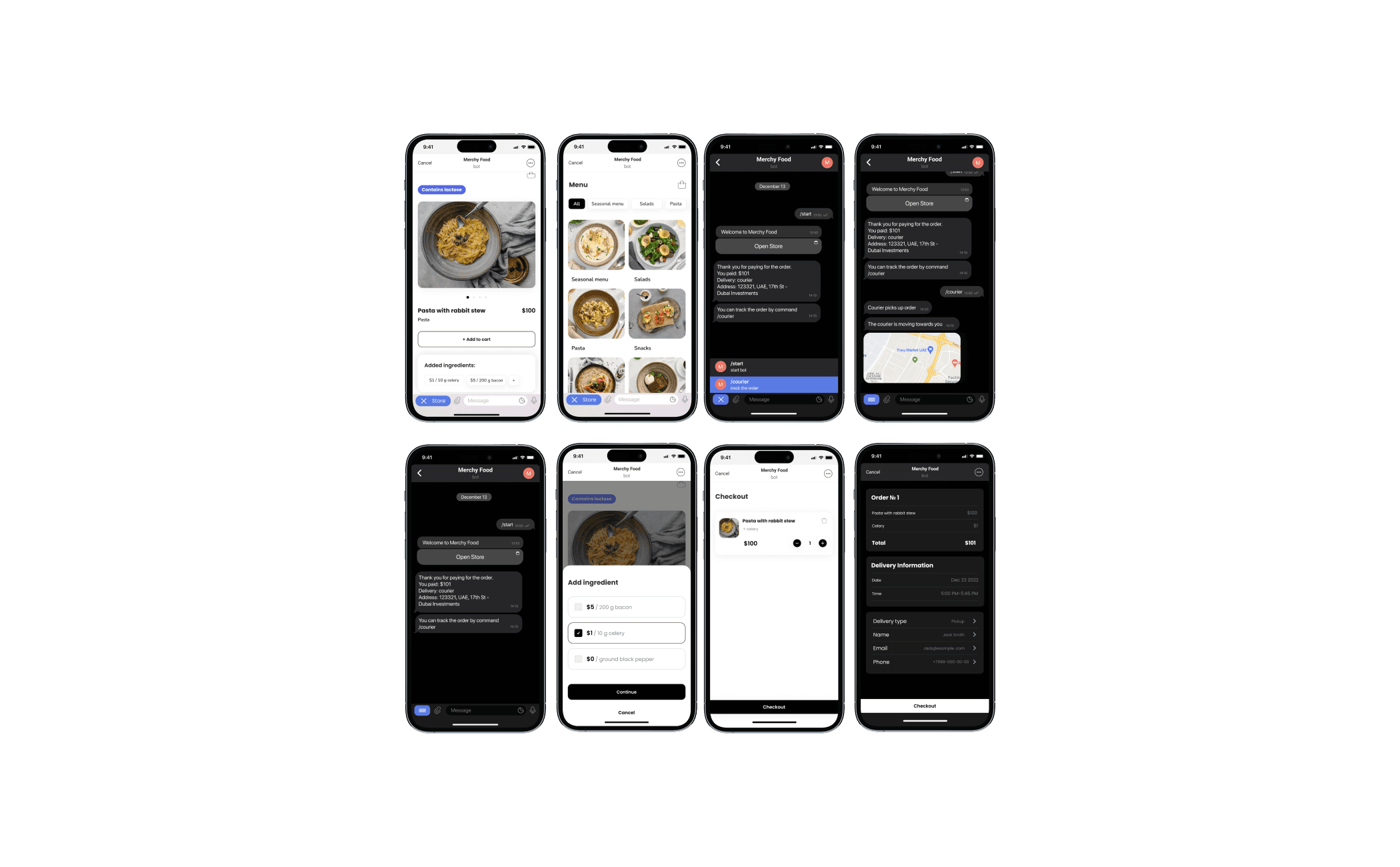
Food Ordering
menus, ingredients, add-ons, cart, delivery tracking
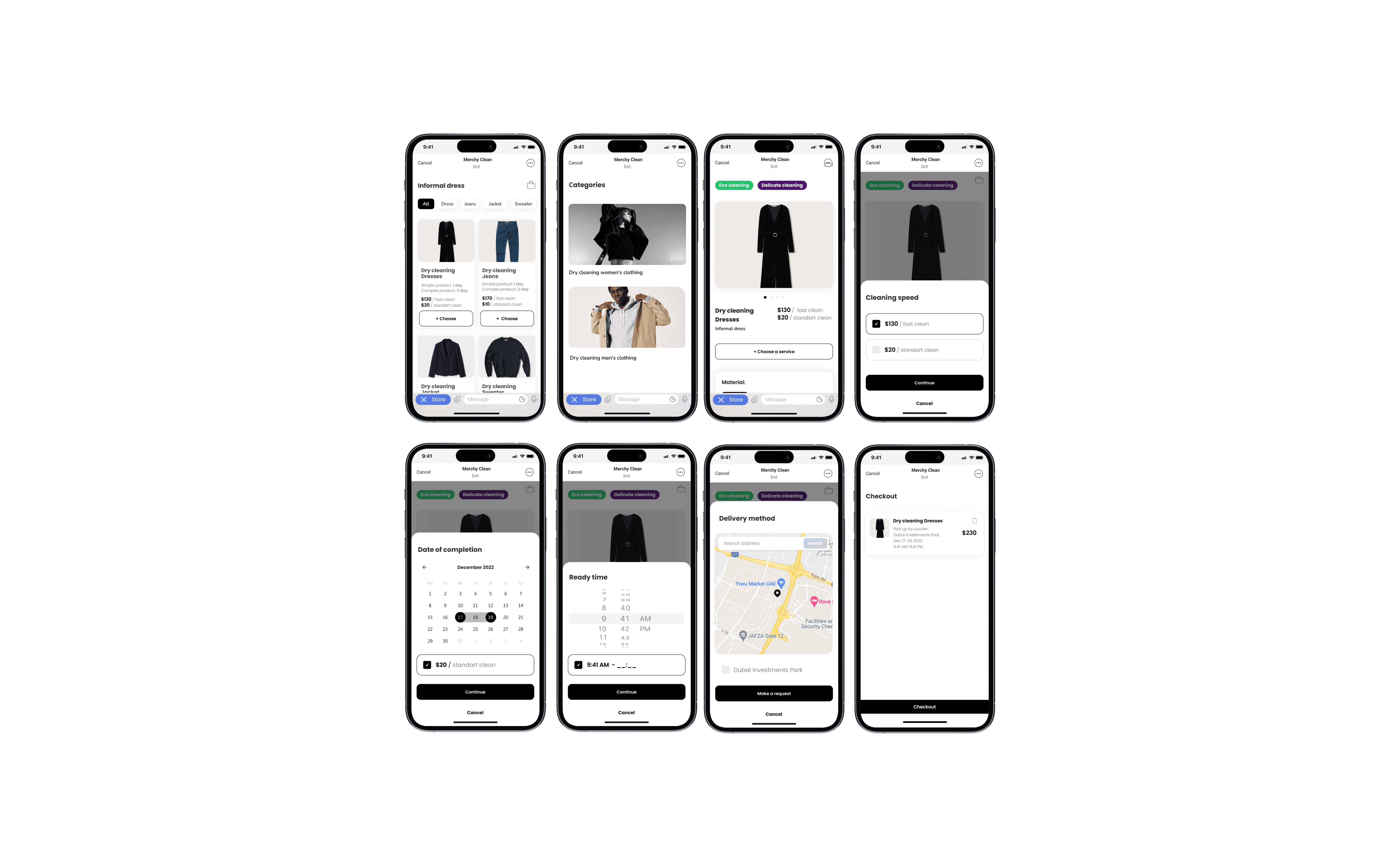
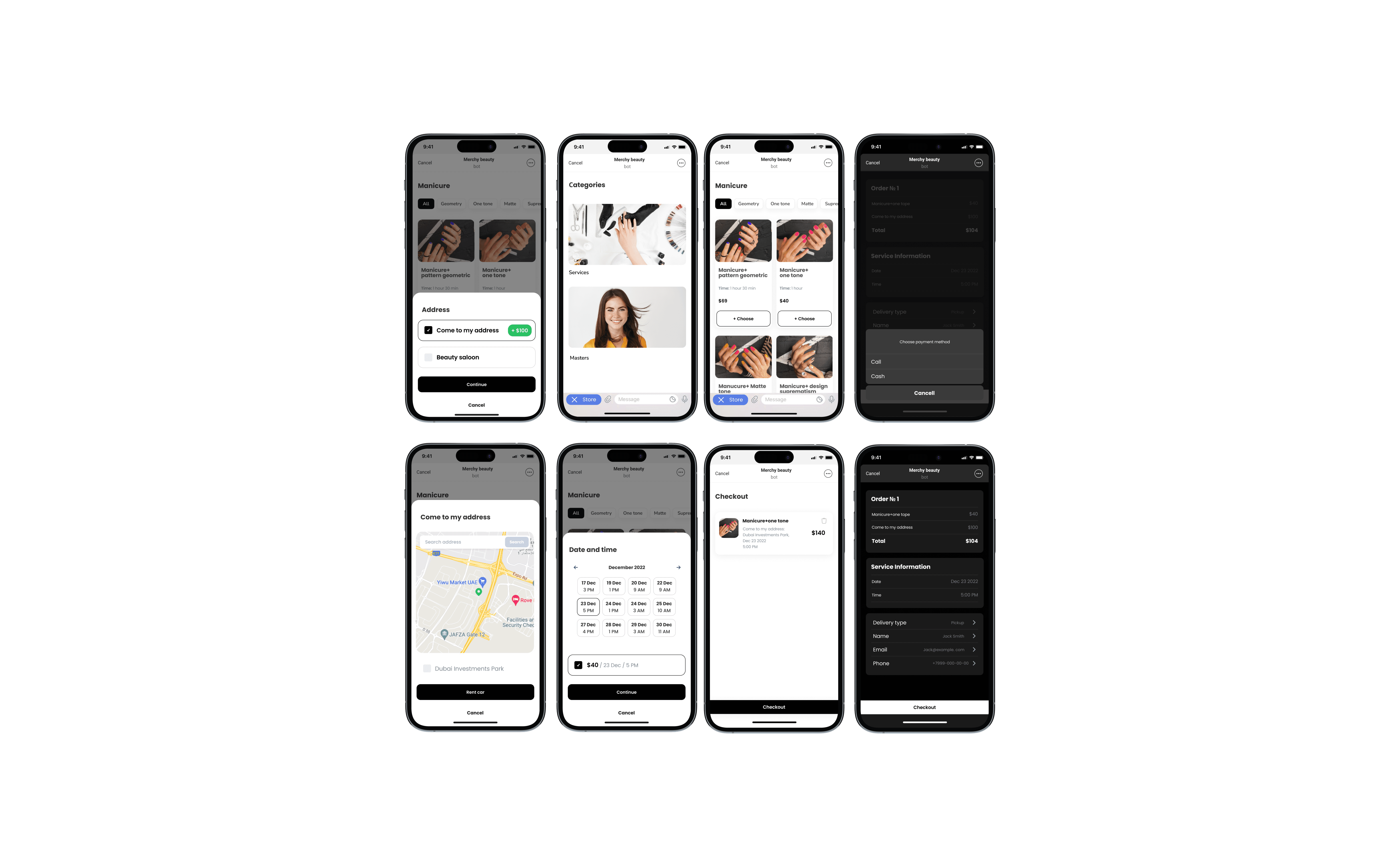
Services & Bookings
scheduling, time slots, duration, capacity management
All verticals reuse:
the same interaction patterns
the same state logic
the same transaction semantics
Only domain-specific constraints and content change.
4. Enterprise-Grade Operational Layer
In parallel with the Telegram WebApp, Data Nexus designed a full SaaS admin platform functioning as a merchant operating system.
Capabilities include:
product and service management
pricing and discount configuration
order and fulfillment control
subscription and tariff management
advanced analytics (revenue, cost, conversion, behavior)
This ensured that Merchy was not only usable, but operationally scalable.
5. Architecture Built for Growth
By abstracting logic into:
transaction states
reusable interaction modules
domain-agnostic components
Merchy can expand to new business models without redesigning its core system.
The platform scales through structure, not through interface multiplication.
Outcome
A unified transactional SaaS platform operating entirely inside Telegram
Support for multiple business verticals on a single architecture
Reduced UX and technical debt through state-driven design
Enterprise-ready admin and analytics infrastructure
Strong foundation for white-label, API, and enterprise deployment
This case demonstrates Data Nexus’s ability to design systems that remain coherent under complexity, and to transform fragmented requirements into scalable SaaS architectures.